Our 2025 Grocery Spending: $16,797 for a Family of Four
In my spreadsheet budgeting days, I always wanted to add our food spending up at the end of the year, but it required more effort than I wanted to put in (very doable, just never happened). Using Monarch has made this much easier, a couple clicks and I had exactly what I needed.
I know we spend a lot on food, probably more than average. I also know that we cook most of our meals at home, don’t rely much on takeout, and don’t skimp on quality food that we enjoy. So, when I finally zoomed out to look at a full year of spending on groceries, I wasn’t shocked that we spent close to $17K but seeing it all added up was still eye-opening.
A quick note on what’s included: our grocery category covers not just food, but also things like supplements, probiotics, vitamins, pet supplies, and occasionally small kitchen items if I don’t feel like splitting them out. If you keep those elsewhere, our numbers might look a bit inflated compared to yours. Our dining out category includes any sort of meals or snacks that don’t come from our house.
The Big Picture: Our 2025 Food Spending
Here’s what the year looked like overall:
Total grocery spending: $16,797
Total dining out: $1,437
Total food spending: $18,234
That breaks down to:
Average groceries: ~$1,400/month or ~$323/week
Average dining out: ~$120/month or ~$28/week
Our annual total dining out expenses were essentially the same as what we spend in a single month on groceries… interesting.
For context, the USDA publishes “healthy” food costs for various household sizes from thrifty to liberal (no idea how they’re defining healthy, but it gives a point of reference). Our spending falls just below the “Liberal” plan (i.e., the highest). Here’s what the USDA has to say about monthly food spending for a family of 4 at the end of 2025.
Thrifty: $972.20
Low-cost: $1,012.20
Moderate: $1,266
Liberal: $1,542.40
No matter how you slice it, you’re spending a signification portion of your money on food each month.
Grocery and Dining Out Spending by Month
Here’s what our monthly spending looked like across 2025 for both groceries and dining out. The dotted line shows the monthly average.
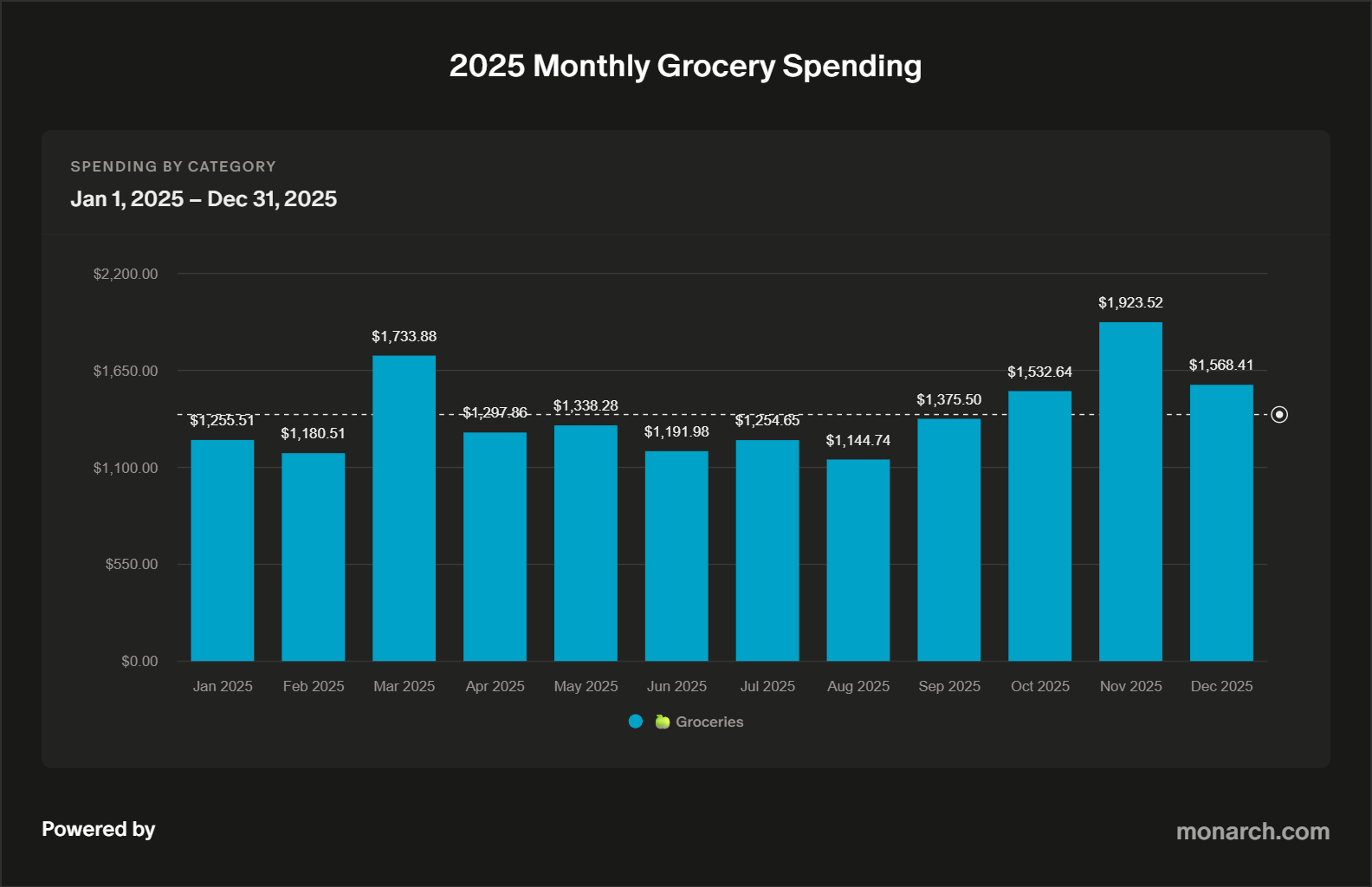
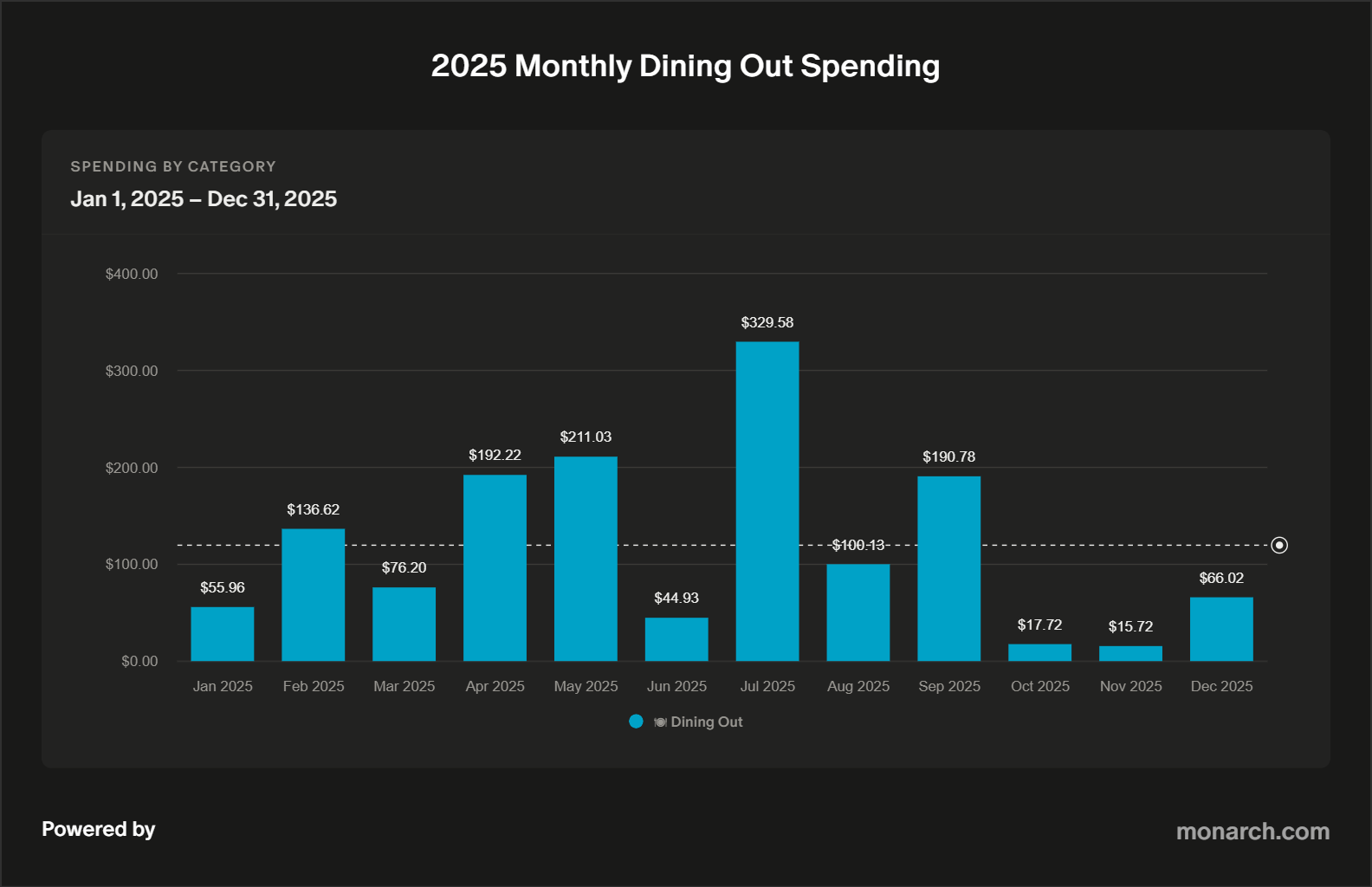
What Was Going on Each Month
A big takeaway from looking at our annual data is how our food spending tracks with life, especially dining out.
January: Out-of-town visitors (twice)
March: Two trips out of town
April: Travel
May: Two kids’ birthdays + visitors
June: Anniversary + H’s surgery (friends brought meals)
July: Two birthdays + celebratory meals
August: Travel + school starting
September: Travel
November: Hosting Thanksgiving + visitors
December: Christmas (no visitors, but we ate well), snack-style gifts, a sleepover, and a New Year’s Eve dinner at our house
Where We Spend Our Grocery Money
Most of our grocery spending is concentrated in just a couple of places:
Costco: 56%
Kroger: 23.1%
The rest breaks down roughly as:
Trader Joe’s: ~4% (snacky/fun food)
Amazon: ~4% (supplements)
Wegmans: ~3.7% (specific “healthy” favorites like Ezekiel wraps)
Aldi: ~2.5% (kefir, pizza, spices)
Publix: ~1.4% (just for their wide selection of Spindrift flavors 😅)
Whole Foods: ~1.1% (non-food items like hair products occasionally)
Where we shop is heavily influenced by proximity and preferences. For example, H will only eat a specific pouch from Kroger right now, so when we need to restock, we also pick up other staples while we’re there.
Dining Out: Low, On Purpose
Dining out is a small category for us, and that’s intentional.
Most of our dining out spending falls into one of three buckets:
Travel days
Special occasions (birthday meals: we celebrated mine, Mike’s, and E’s last year with meals out)
Vacation treats like ice cream
Day-to-day takeout is rare. Typically, we feel like we can make something at home that tastes better, and dining out can be stressful with a very picky eater. Keeping this category small gives us more flexibility elsewhere.
Reflections and Takeaways
A few things stood out after looking at the full year:
I was initially surprised that no month dipped below $1,000 for groceries, but after looking at the USDA food plan numbers, I’m questioning how easy this would actually be to achieve
I really like that dining out stays low and is mostly celebratory.
Seeing the annual total helped reset my expectations. Cooking at home and having delicious home cooked meals with friends are major priorities for us right now, and it shows in how we spend our money.